
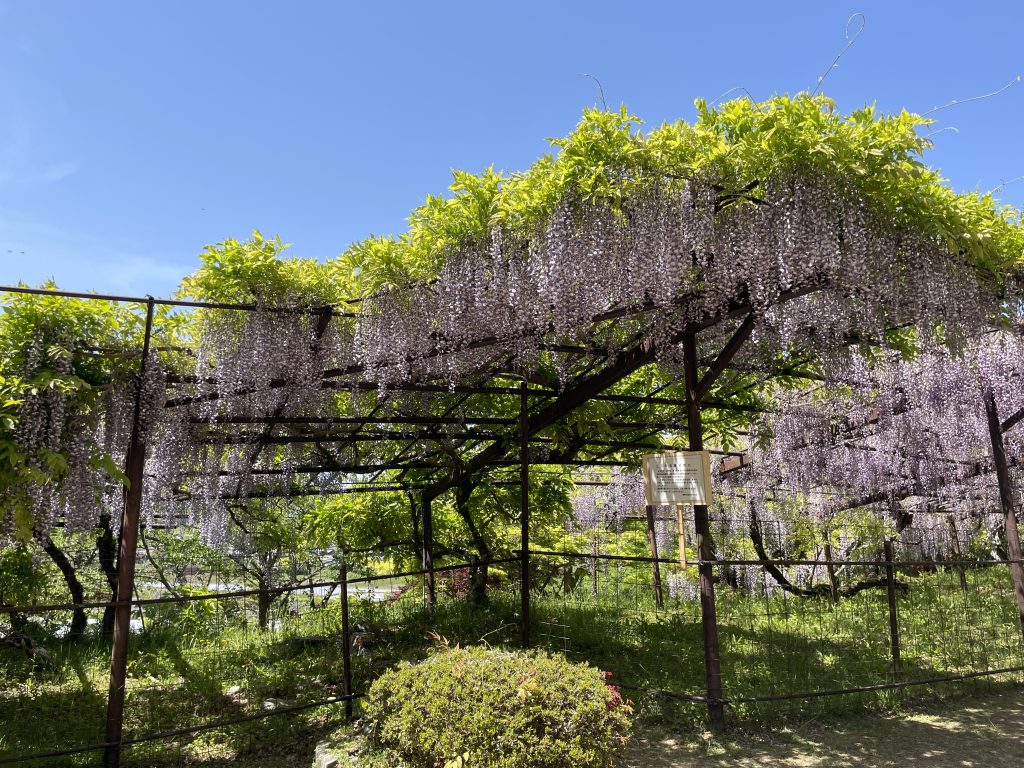
Wisteria (fuji in Japanese) is one of the most elegant flowers of spring. With its soft purple petals and gentle fragrance, it creates a dreamlike scene—but only for a short time. Wisteria blooms last about two weeks, making it a special seasonal treat for those who catch it at just the right moment.
Unlike the famous cherry blossoms, wisteria is not as widely known among international visitors. But in Japanese history, it has played an important role. The powerful Fujiwara clan, whose name includes the character for wisteria, was one of the most influential families in ancient Japan. Their legacy is deeply connected to sacred places such as Kasuga Taisha Shrine in Nara.
Recently, I visited a small temple in Shiga Prefecture to enjoy the wisteria in full bloom. It was far from the crowds of Kyoto. The temple was quiet, peaceful, and surrounded by nature. I saw a few large carpenter bees (kumabachi) flying slowly among the flowers. Although they may look scary, they are gentle and do not harm people.
Time seemed to slow down at this temple. There were no selfie sticks or noisy tour buses. It was a calm and honest piece of Japan, far from the impact of over-tourism.
Getting there wasn’t easy—the temple is located in rural Shiga, with limited public transport. But maybe that’s what made it so special. There are still many hidden places like this in Japan, waiting for travellers who are curious and patient.
If you’re looking for something beyond the usual tourist spots, I’d love to help you discover these peaceful corners of Japan. Let’s go explore together.